flatpicking guitar

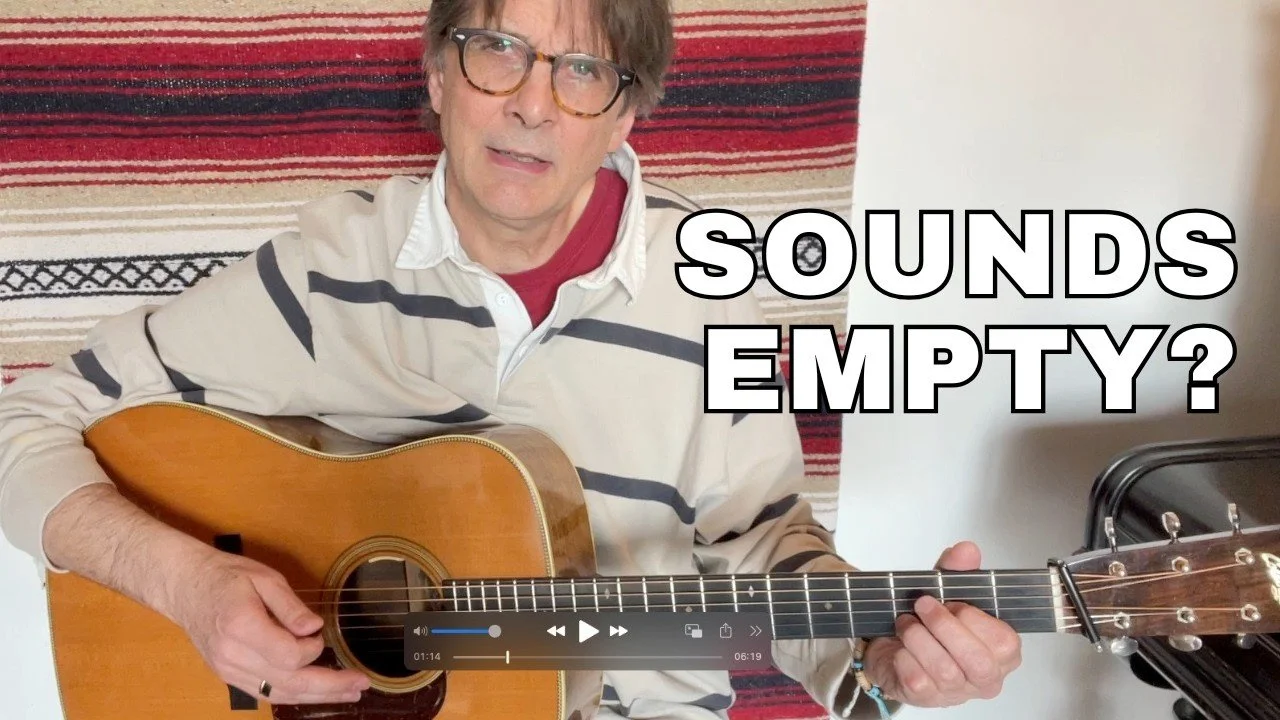
Playing Flatpicking Alone? This Is Why It Sounds Flat

Playing flatpicking alone can feel frustrating.
The notes are correct, the rhythm is fine, but the music doesn’t feel complete.

The most common assumption is that the melody isn’t loud enough.
In reality, the real issue is that everything is played like it’s melody.

Solo flatpicking requires clarity.
The listener must immediately understand what the melody is and what supports it.

When melody, bass, and filler notes all have the same weight, the result sounds flat — even with good technique.

A simple rule helps:
The melody needs exclusive rights.

This means:

  • the melody is clear and intentional

  • accompaniment is lighter and supportive

  • unnecessary notes are removed

You don’t need more speed or complexity.
You need better decisions.

This approach is especially helpful if you:

  • play guitar alone

  • don’t sing

  • are moving from fingerstyle to flatpicking

  • are getting back into guitar after a long break

You can watch the full video explanation and musical example here:
https://youtu.be/37mmmTrYUIU

With clarity, solo flatpicking can sound complete — even without a band.


How Three Simple Chords Can Create a Solo Flatpicking Tune (A–Amaj7–Dmaj7)

If you enjoy playing solo flatpicking and want something simple that still sounds musical, this exercise is a great place to start. It uses only three chords — A, Amaj7, and Dmaj7 — but the magic comes from exploring them in three different positions on the neck.

Each position has its own color. When you add a few short connecting phrases, everything comes together as a small but complete piece you can play on your own. It’s a great way to practice chord knowledge, tone, and phrasing without getting lost in complicated licks.

Watch the video here: https://youtu.be/MlT1UwQPyDw?si=X8ZwT1cBu3Mt7CIL


If you’d like the TAB for this study, just leave a comment saying “Major Seventh” and I’ll send it your way.

Drop-D Tuning Made Easy: A Flatpicker’s Guide

Drop-D tuning is one of the simplest ways to transform your guitar sound. With just one string change — lowering your low E string down to D — you open up a world of new tones and chord possibilities.

For flatpickers, it’s a favorite because it adds depth to D, G, and A chords, making your solo arrangements sound full and resonant. Whether you’re arranging tunes, composing, or just exploring new sounds, Drop-D gives you that bigger, rounder tone we all love.

In my new video, I’ll guide you step by step through:

  • How to tune your 6th string from E to D

  • The essential Drop-D chord shapes

Watch the video: Drop-D Tuning Made Easy

Want to start experimenting right away? Comment “Chord Chart” on the video, and I’ll send you my free Drop-D Chord Chart with all the main shapes you need.

If you love acoustic flatpicking and want to learn how to make solo pieces sound complete and expressive, subscribe to my channel for new lessons every week.

One Melody, Three Places – A Simple Exercise for Guitar Growth

Hi friends,

This week, I uploaded a new video on YouTube that I think many of you will enjoy—especially if you're working on this month’s challenge!

The idea is simple: take the first phrase of Amazing Grace (just a few notes!), and play it in different areas of the fretboard. Always in the key of G.
It’s not flashy or complicated—but trust me, it’s powerful.

Here’s what this exercise helps you develop:

  • 🎸 Fretboard awareness – You start “seeing” the same melody in multiple shapes and positions.

  • 👂 Ear training – Hearing how the melody sounds as you move it around sharpens your musical ear.

  • 🧠 Mind–finger connection – You build that important link between what you imagine and what your hands do.

These are the small but deep things that help us grow as guitar players.

And yes, this connects directly with July’s Challenge of the Month, where we’re exploring Oh! Susanna in three different fretboard positions. So if you’re working on that challenge, this video might give you a few ideas or a helpful warm-up.

👉 Watch the video here:
https://youtu.be/EkK892C8y2M

Hope you enjoy it—and as always, let me know what you think!

Thanks for following the journey,
– Roberto

A New Warm-Up for Your Picking Hand: String Skip Groove

This week, after a long time without it, I renewed my Netflix subscription. My wife and I ended up watching the mini-series Adolescence in one night.
I have mixed feelings… The story probably could have been told in two hours, but I really appreciated how deeply it explored the world of today’s teenagers. Raw, honest, and quite intense at times.

On a completely different note — I want to share a new right-hand exercise I recently came up with, and it’s now on YouTube.

🎸 It’s called String Skip Groove.
It’s a simple but effective warm-up that focuses on alternate picking and string skipping, while changing chords throughout. It helps improve coordination, accuracy, and overall groove.

It’s become one of my favorite ways to warm up the right hand — and I think it can be useful for late beginners and early intermediate players who want to level up their picking.

🎥 You can watch the full video here: https://www.youtube.com/watch?v=5Z7LJj6lUkA

Try it out, and let me know how it feels!

Until next time,
Roberto

A Crosspicking Exercise That Does More Than One Job

As I get older, I’ve become more selective about how I practice. Time is short, energy isn’t endless, so I look for exercises that make the most of both. My favorite ones are those that help you grow in multiple areas at the same time — not just dry drills, but things that connect technique with real music.

In my latest YouTube lesson, I teach a very common crosspicking pattern (on strings 4, 3, and 2) and show how to apply it across the fretboard to all the shapes of C, F, and G chords.

It’s a simple idea, but very effective:

  • You work on your right-hand picking

  • You learn chord shapes in the key of C

  • You stay connected to the sound and feel of real music

There’s no tab, but the video is easy to follow by watching and listening.

▶️ Watch the video here: https://youtu.be/sMI1UhVgJNQ

And if you’d like more lessons like this — including breakdowns, exercises, and in-depth videos — come visit my TrueFire channel:
🎸 https://www.truefire.com/h2343

Hope you enjoy it,
Roberto