rest stroke

How to Add Dynamics to Solo Flatpicking — Rest Stroke and Palm Muting

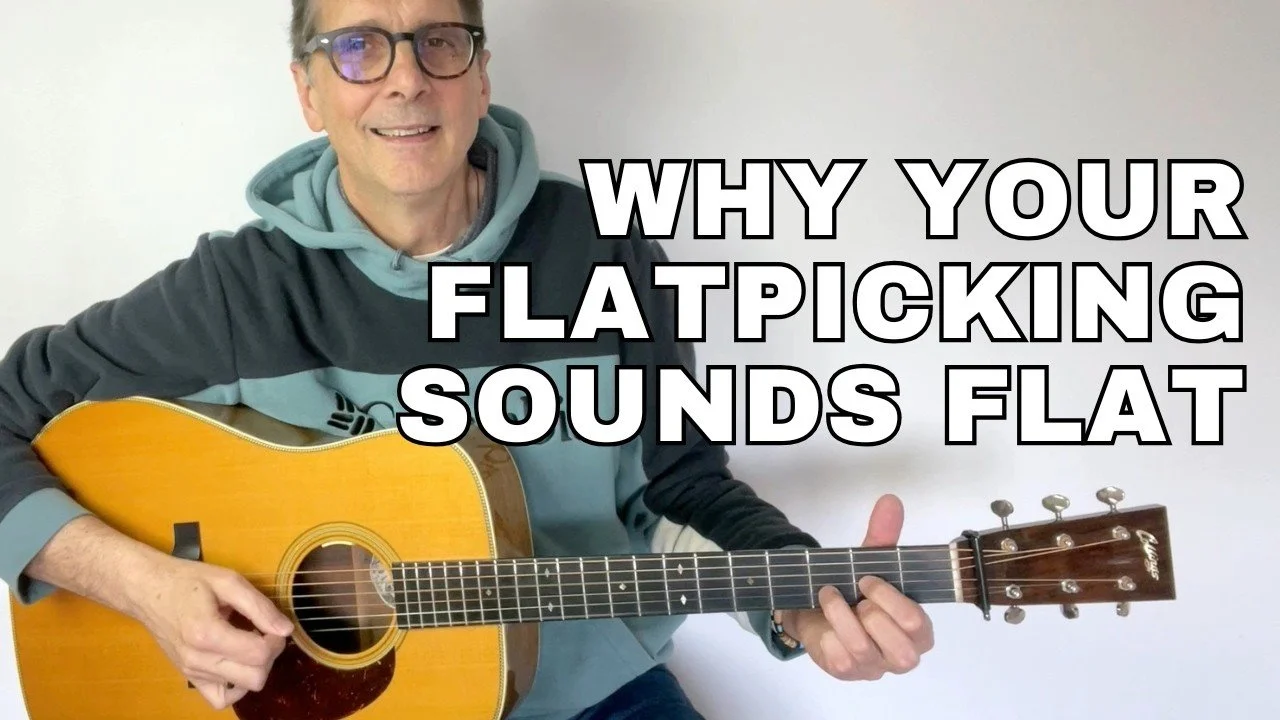
If your solo flatpicking sounds flat — even when the notes are right — you are not alone. This is one of the most common problems for guitarists who want to play complete instrumental pieces without a band.

The issue is rarely technique in the conventional sense. It is almost always dynamics: every note carries the same weight, the same volume, the same presence. The result is music that is correct but not alive.

In this video I take a short original phrase and show you two ways to fix that.

Rest stroke

The rest stroke — borrowed from classical and fingerstyle vocabulary, adapted here for flatpicking — means that after you pick a note, the pick comes to rest against the next string rather than moving freely through the air. The contact creates resistance, and that resistance produces a fuller, heavier tone.

Used selectively, on one or two notes in a phrase, it changes the character of everything around it. The notes you do not accent become lighter by contrast. The phrase starts to breathe.

Palm muting

Palm muting is the other side of the same coin. Where rest stroke adds weight, palm muting pulls back — a light contact of the palm near the bridge dampens the sustain and creates a darker, more compressed sound.

In solo flatpicking, used briefly inside a phrase, it creates the kind of textural contrast that makes a listener lean in. It sounds like a change of register, almost like a second voice entering.

Why contrast matters more than volume

Neither technique is about playing louder or softer in the obvious sense. Both are about making certain moments feel different from the ones around them. That difference — that contrast — is what the ear reads as musical depth.

If you want to hear both techniques applied to the same short phrase, watch the video. The before and after is immediate.

Get the tablature

Comment TAB on the video and I will send you the link to the tablature for the phrase used in the demonstration.

Keep going

If you want to start building complete solo flatpicking pieces — not just exercises — I put together a free lesson for that: Your First Complete Solo Guitar Piece

And if you want full lessons, arrangements, and direct feedback on your playing, Flatpicking Experience is the place: Flatpicking Experience on TrueFire